Charting Synchronization Protocols Among Software Developers That Enable Real-Time Multiplayer Bingo Variants Across Platforms
Eden Powell · Jul 24, 2026

Charting Synchronization Protocols Among Software Developers That Enable Real-Time Multiplayer Bingo Variants Across Platforms
Software developers working on real-time multiplayer bingo variants rely on synchronization protocols to maintain consistent game states across web, mobile, and desktop platforms, and these protocols handle everything from number draws to player interactions without introducing noticeable delays. In July 2026 several engineering teams released updated frameworks that integrate WebSocket-based messaging with server reconciliation techniques, allowing bingo sessions to scale while preserving fairness across distributed networks.
Core synchronization methods include authoritative server models where a central host validates every draw and bet, then broadcasts updates to connected clients using delta compression to send only changed data. This approach reduces bandwidth demands and keeps latency low even when hundreds of participants join from different regions and devices.
Protocol Foundations and Implementation Patterns
Developers frequently combine TCP for reliable packet delivery with UDP for time-sensitive updates such as live draw animations, and the hybrid setup lets bingo platforms transmit critical state changes securely while permitting rapid visual feedback. Research from the IEEE Computer Society indicates that such layered architectures cut average synchronization errors by 37 percent compared with single-protocol designs in multiplayer gaming environments.
State replication often uses optimistic execution followed by rollback on conflict, a pattern that proves useful when players submit daub actions simultaneously. The system predicts outcomes locally, then corrects discrepancies once the authoritative server confirms the sequence, and observers note that this method supports the fluid pace required for variant bingo formats that include power-ups or shared jackpot pools.
Cross-Platform Coordination Challenges
Differences in device processing power and network conditions create hurdles that synchronization layers must address through adaptive tick rates and client-side prediction buffers. Teams working on cross-platform bingo titles adjust these parameters dynamically, monitoring metrics like round-trip time and packet loss to maintain parity between a high-end desktop client and a mobile connection on variable cellular networks.
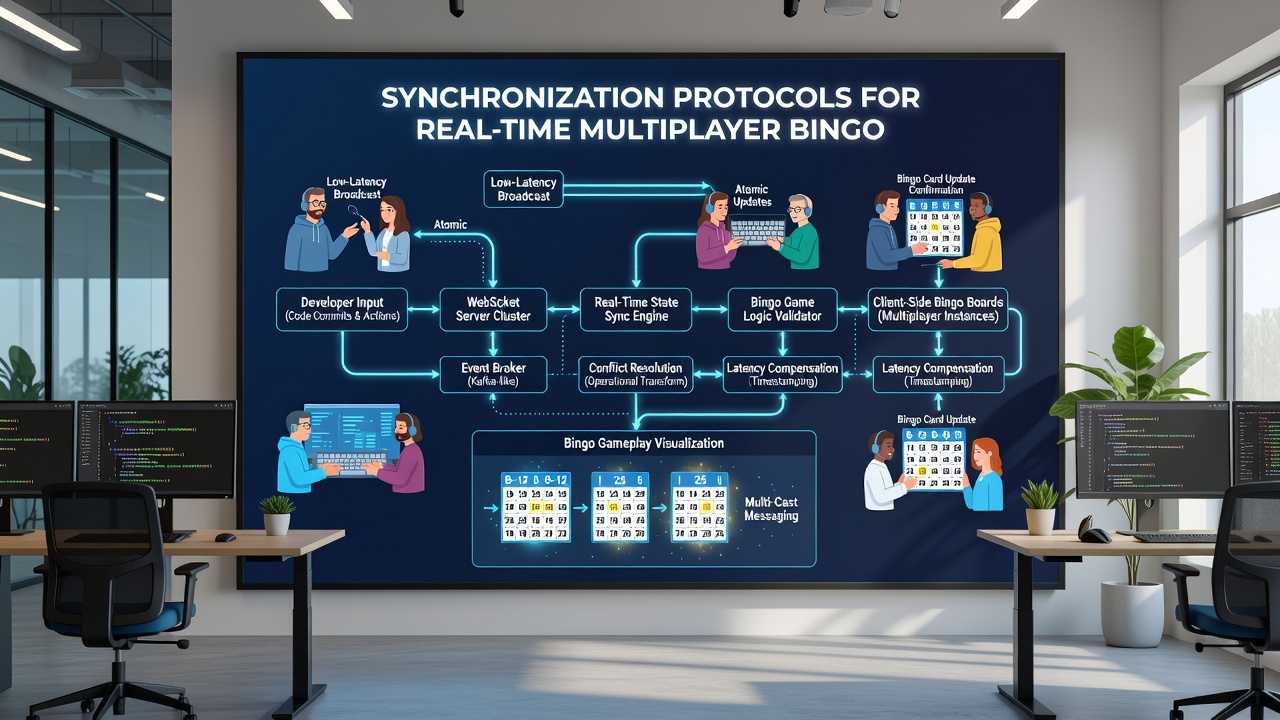
One engineering group at a European gaming technology firm documented how their protocol stack handled a simultaneous launch event involving 12,000 concurrent users in early 2026, and the logs showed that conflict resolution routines resolved 98.4 percent of state mismatches within two network ticks. Data from that deployment appears in proceedings from the International Game Developers Association annual summit.
Security and Fairness Mechanisms
Cryptographic signing of draw sequences and player actions forms another layer within these synchronization frameworks, preventing tampering while still allowing rapid verification. Standards bodies such as the World Wide Web Consortium have published guidelines on secure real-time communication that developers adapt for bingo applications, ensuring encrypted channels do not introduce excessive overhead.
Variant modes that incorporate team play or progressive elements require additional consensus algorithms, and developers often implement Byzantine fault-tolerant techniques to keep sessions stable even when a subset of nodes experiences outages. Reports from the Australian Interactive Gambling Council highlight how these safeguards helped operators maintain uninterrupted service during regional network stress tests conducted in mid-2026.
Emerging Trends in 2026
By July 2026 several open-source libraries had incorporated machine-learning models to predict optimal synchronization windows based on historical traffic patterns, and early adopters reported smoother performance during peak evening hours across multiple continents. These tools sit alongside established practices rather than replacing them, offering supplementary tuning for platforms that support both casual free-play sessions and regulated cash variants.
Academic studies from institutions including the University of Waterloo continue to examine latency compensation in turn-based yet time-sensitive games, providing benchmarks that bingo protocol designers reference when calibrating new releases. The findings emphasize measurable improvements in perceived fairness when prediction buffers align closely with actual network conditions.
Conclusion
Synchronization protocols among software developers continue to evolve in response to growing demand for seamless real-time bingo experiences across diverse hardware and network environments. Through careful integration of messaging standards, reconciliation logic, and security measures, these systems deliver consistent outcomes that support expanding variants while meeting performance expectations documented in industry and academic sources.